The first one is a serie of rocks and a dolmen made of polyestiren foam based over plastic sheet. They could be use to form a piece of rough terrain or to transform a gentle hill into a rough hill, for example.
Mostrando entradas con la etiqueta scenery. Mostrar todas las entradas
lunes, 28 de noviembre de 2011
Quick 15mm scenery
I've been working on a couple of quick 15mm scenery pieces for Bytenwalda. They took just a few minutes to finish, but they will work fine during the game.
The first one is a serie of rocks and a dolmen made of polyestiren foam based over plastic sheet. They could be use to form a piece of rough terrain or to transform a gentle hill into a rough hill, for example.
The next terrain piece is a serie of broken or chopped down trees. They are just broken branches picked from the ground during a windy day. They may be use to add character to a forest or to perform their own dead forest scenery (I'm thinking on the Perilous Forest :)).
The first one is a serie of rocks and a dolmen made of polyestiren foam based over plastic sheet. They could be use to form a piece of rough terrain or to transform a gentle hill into a rough hill, for example.
jueves, 17 de noviembre de 2011
Xmas bridges
miércoles, 4 de agosto de 2010
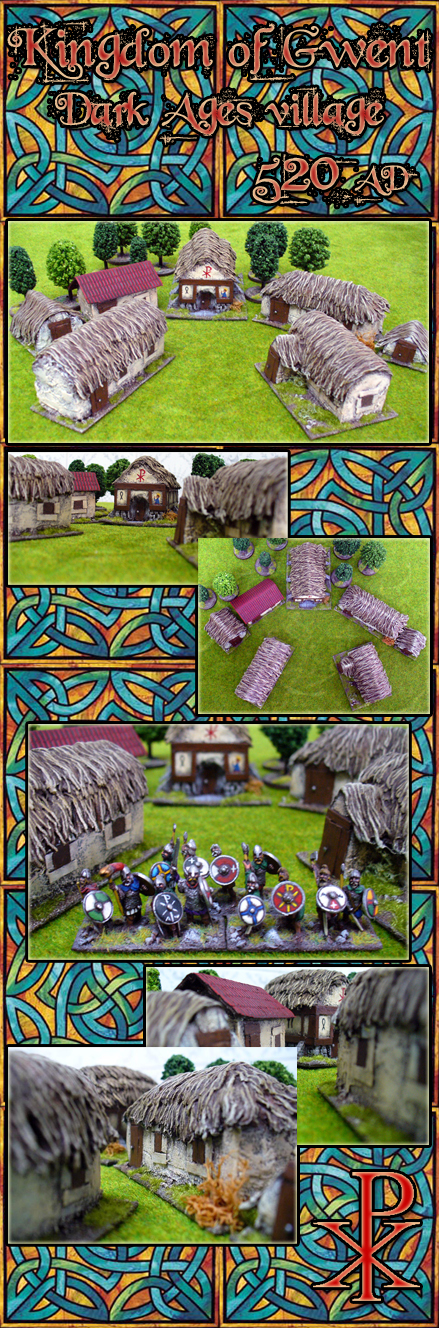
Kingdom of Gwent: 520 AD
The whole Dark Ages romano-british town is finished. It's made of foam, string and cadboard.
Being in 15mm it was quite easy and fast to built up.
These buildings represent a town close to Colonia Nervia Glevensium (Gloucester), in the area which was the eastern frontier of the kingdom of Gwent during the VI century. Close to Lloegyr, a very dangerous place... and a good area to play saxon raids in Brytenwalda!
The buildings are simple houses with straw roofs where one or more families used to live in. This is the same basic structre that we can see today on the popular english and irish cottages.The materials are quite more exquisites than those that we could find deep into Cambria during that age, like the comunal timber houses of Brycheiniog and Morgannwg. You can see even an old tiled roof building maybe made by the romans more than a century ago. The smaller buildings were used to keep food; think on the local harvest or smocked meat and fish.
Being in 15mm it was quite easy and fast to built up.
These buildings represent a town close to Colonia Nervia Glevensium (Gloucester), in the area which was the eastern frontier of the kingdom of Gwent during the VI century. Close to Lloegyr, a very dangerous place... and a good area to play saxon raids in Brytenwalda!
The buildings are simple houses with straw roofs where one or more families used to live in. This is the same basic structre that we can see today on the popular english and irish cottages.The materials are quite more exquisites than those that we could find deep into Cambria during that age, like the comunal timber houses of Brycheiniog and Morgannwg. You can see even an old tiled roof building maybe made by the romans more than a century ago. The smaller buildings were used to keep food; think on the local harvest or smocked meat and fish.
martes, 3 de agosto de 2010
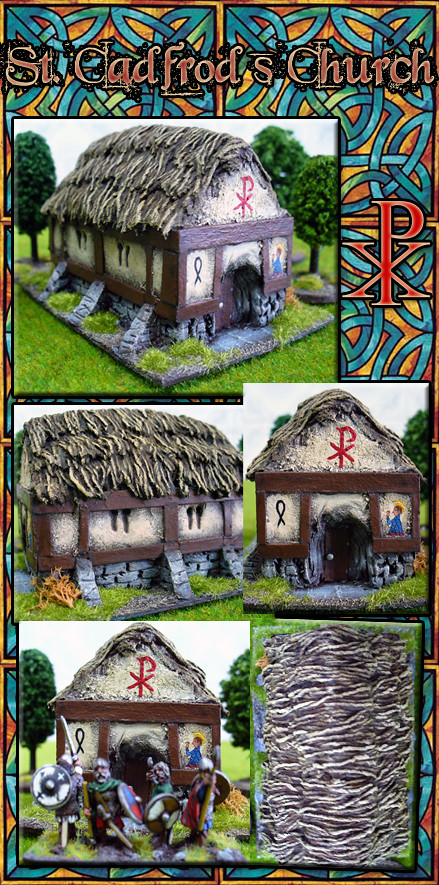
Saint Cradfrod's church
This is the first scenery model for Brytenwalda I've finished. It's the first building for the project of a Dark Ages village in 15mm.
The structure is made of foam and the straw roof is made of string.
Saint Cadfrod was bishop of Caerleon (close to Newport, in South Wales) between the IV and V centuries.

The structure is made of foam and the straw roof is made of string.
Saint Cadfrod was bishop of Caerleon (close to Newport, in South Wales) between the IV and V centuries.
Suscribirse a:
Entradas (Atom)